Benefits of alarms in BMS
In today’s smart buildings, Building Management Systems (BMS) play a crucial role in ensuring comfort, safety, and energy efficiency. Alarms are not just alerts—they are the first line of defense against system failures, safety hazards, and operational inefficiencies.
Here are some of the benefits of alarms in building management systems:
Early warning system for system faults and malfunctions
Improve building safety and security
Reduced maintenance costs
Efficient energy management
Guarantee occupant's comfort
Types of Alarms in Building Management Systems
Understanding the different types of alarms is key to effective building management:
1. Fault Alarms
Triggered by equipment failures—like a malfunctioning HVAC unit or a broken sensor.
2. Environmental Alarms
Alert operators to unsafe conditions such as high humidity, smoke, gas leaks, or poor air quality.
3. Security Alarms
Activated by unauthorized access, door breaches, or motion detection in restricted areas.
4. Maintenance Alarms
Remind staff when systems require routine maintenance or inspections, helping prevent costly breakdowns.
How Alarms Work in a BMS
Here’s a simplified flow of how alarms function in a BMS:
- Sensors detect anomalies in temperature, pressure, motion, etc.
- Controllers evaluate the data against set thresholds.
- Alarms are triggered when values exceed safe limits.
- Notifications are sent to operators via dashboards, emails, SMS, or mobile apps.
- Logs are created for future analysis, compliance, and optimization.
The Role of IoT and Cloud in Modern Alarm Management
Modern BMS platforms, especially those powered by IoT and cloud technologies, are revolutionizing alarm management:
- Real-time alerts on mobile devices
- Remote monitoring and control
- Wireless sensor integration for hard-to-reach areas
- Data sharing with stakeholders like facility managers, tenants, and service providers
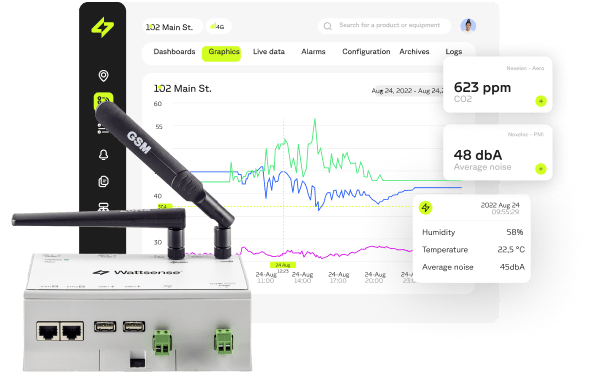
Solutions like Wattsense make these capabilities accessible to small and medium-sized buildings by offering affordable, plug-and-play platforms that integrate seamlessly with existing systems.
Why Alarm Management Matters
Effective alarm management helps:
- Prevent equipment damage
- Ensure occupant safety
- Reduce energy waste
- Improve operational efficiency
- Support compliance with safety regulations
Conclusion
Alarms are the heartbeat of any Building Management System. They provide the visibility and responsiveness needed to maintain safe, efficient, and comfortable environments. With the rise of IoT and cloud-based platforms, even smaller buildings can now benefit from advanced alarm management, without the complexity or cost of traditional systems.
Looking to modernize your building’s alarm system? Explore how Wattsense can help you gain control, integrate seamlessly, and scale affordably.
The Wattsense BMS Solution for Optimized Building Management
Easily set up alarms and optimize your maintenance needs. Your technicians are the first to know if there is a problem with the building's equipment.