Building Energy Management: Transforming Operations with IoT


In an era of rising utility costs and environmental regulations, building energy management has moved from a back-office concern to a primary strategic priority. Traditional methods of monitoring energy are no longer sufficient to meet the demands of modern occupants and real estate portfolios. Organisations now require granular, real-time insights to eliminate waste.
By leveraging the Internet of Things (IoT), facility managers and property owners can transition from reactive maintenance to proactive optimisation. This digital transformation allows for the centralisation of data across diverse assets, ensuring that every kilowatt-hour is accounted for. Smarter connectivity is the foundational step toward achieving sustainable building performance.
What is a Building Energy Management System (BEMS)?
A building energy management system (BEMS) is a sophisticated combination of hardware and software designed to monitor, control, and optimise energy loads. Unlike manual tracking, a BEMS provides automated oversight of a facility's energy-consuming equipment, such as lighting, power systems, and ventilation units, to ensure maximum energy efficiency.
By integrating sensors and controllers into a unified platform, a building energy management system enables managers to visualize consumption patterns. This visibility is essential for identifying anomalies, such as equipment running during unoccupied hours, which often accounts for a significant portion of avoidable energy expenditure in commercial properties.
The role of BEMS in the modern smart building
In a smart building, the BEMS acts as the central nervous system for environmental performance. It collects data from various points, such as smart meters and temperature sensors, to create a comprehensive view of how energy flows through the structure. This data-driven approach is critical for achieving Net Zero goals.
Modern building energy management systems do more than just record data; they facilitate intelligent interactions between systems. For instance, a BEMS can adjust heating levels based on actual occupancy data, ensuring comfort while minimizing waste. This level of automation is what distinguishes a high-performing facility from a standard one.
Key differences between BMS and BEMS
While often used interchangeably, there is a technical distinction between a BMS (Building Management System) and a BEMS. A BMS (Building Management System) is a broad platform that manages all building functions, including security, fire safety, and lift control, focusing primarily on operational functionality and safety.
In contrast, a BEMS is specifically focused on energy. While a BMS (Building Management System) might control an HVAC unit, the BEMS analyzes the energy performance of that unit to optimize its consumption. For many facilities, integrating these systems provides the most comprehensive approach to building energy management.
Challenges in traditional energy management strategies
Many organizations struggle with outdated building energy management strategies that rely on manual meter readings or siloed software. These "dumb" systems provide a fragmented view of performance, making it nearly impossible to implement effective energy-saving measures across a large or diverse property portfolio.
Furthermore, traditional systems often lack the flexibility to adapt to new technologies. As buildings incorporate more IoT sensors and renewable energy sources, legacy infrastructure becomes a bottleneck. The inability to unify these new data points leads to missed opportunities for optimisation and increased operational overhead.
The barrier of legacy equipment and siloed data
A major hurdle in building energy management is the prevalence of legacy equipment. Many boilers, chillers, and meters communicate via older protocols that are not natively compatible with modern cloud platforms. This creates data silos where valuable energy information remains trapped within individual machine controllers.
Without a way to extract and unify this data, facility managers are forced to use multiple interfaces to monitor a single building. This fragmentation hinders the ability to correlate data—such as comparing weather patterns with heating loads—which is essential for sophisticated building energy management systems to function effectively.
Complexity of installation and interoperability issues
Traditional BMS (Building Management System) installations are notoriously complex, often requiring specialized technicians and weeks of manual programming. This high barrier to entry prevents many small to medium-sized buildings from implementing effective energy monitoring and control strategies, leaving them with inefficient, unmanaged systems.
Interoperability remains a critical concern. In a single facility, you might find BACnet controllers, Modbus meters, and new LoRaWAN sensors. Bridging these different "languages" usually requires expensive custom gateways, making the deployment of comprehensive building energy management systems cost-prohibitive for many property owners.
Wattsense: The connectivity tool for energy efficiency
Wattsense provides a streamlined solution to these challenges by offering a universal IoT gateway that simplifies building connectivity. Our technology is designed to break down data silos, allowing you to collect and centralise information from any equipment, regardless of its age or original communication protocol.
By removing the technical complexity of integration, Wattsense empowers facility managers to improve building performance and cut operational costs. Our plug & play approach ensures that you can start collecting actionable energy data in hours, not weeks, providing an immediate boost to your building energy management strategy.
Universal Interoperability: Merging LoRaWAN, BACnet, Modbus, and MQTT
The core strength of Wattsense lies in its ability to speak every major building language. Our gateway supports BACnet, Modbus, M-Bus,LoRaWAN, KNX, M-BUS, LPB, effectively acting as a universal translator. This allows you to combine traditional wired equipment with modern wireless sensors into a single data stream.
This interoperability is vital for modern energy efficiency projects. For example, you can use LoRaWAN CO2 sensors to drive HVAC control logic within an existing BACnet network. By unifying these protocols via MQTT or API, Wattsense ensures your data is ready for any analytics platform.
Simplifying data collection for PropTechs and Facility Managers
Data collection is often the most difficult part of a smart building project. Wattsense eliminates this friction by providing an intuitive console for remote configuration. This means you can discover devices, map data points, and manage your gateway settings from anywhere in the world.
Whether you are a PropTech company building a new energy dashboard or a facility manager overseeing a retail chain, Wattsense provides the reliable connectivity you need. We handle the "heavy lifting" of hardware integration, so you can focus on analysing data and implementing effective building energy management measures.
Three solutions to optimise our building energy management
To meet the diverse needs of the market, Wattsense offers three distinct solutions. Each is designed to address specific use cases, from local BMS (Building Management System) integration to cloud-based energy analytics for large-scale portfolios, ensuring a perfect fit for any building type.
Our solutions, the Bridge, Tower Lift, and Tower Control, provide the flexibility needed to scale your building energy management efforts. They allow you to turn your buildings into smart buildings quickly, providing the infrastructure required for advanced monitoring and intelligent automation.
Tower Control: the "Light BMS" for small to medium-sized buildings
Wattsense Tower Control is our flagship offering, providing a full suite of tools for monitoring and optimising building performance. Designed as a "Light BMS," it is the ideal solution for small to medium-sized commercial buildings, such as post offices or retail branches, that require intelligent automation.
With Tower Control, you can implement sophisticated HVAC control through custom automation scenarios and time-based scheduling. It features remote alarms and intuitive dashboards, allowing you to react to conditions in real-time. This comprehensive solution puts you in command of your building’s energy consumption and operational costs.
Tower Lift: Cloud connectivity for energy analytics platforms
For PropTechs and data-driven organisations, Tower Lift provides powerful Cloud connectivity focused purely on efficient data retrieval. It is the perfect solution for portfolios where the primary need is to collect vast amounts of data from electricity meters, water meters, and environmental sensors.
Tower Lift features data collection historisation and seamless API & Webhook integration. This allows you to push a building’s data directly into your preferred energy management software or central analytics platform. It is designed for those who want to leverage building data for billing, predictive maintenance, and energy performance reporting.
The Bridge: local gateway for on-site supervision
The Wattsense Bridge is our foundational local gateway, designed for integrators and distributors focused on local data acquisition. It provides a reliable bridge for on-site supervision, allowing sensor data, such as LoRaWAN, to be integrated into an existing BMS (Building Management System) for local control.
Key features include remote configuration and real-time data access. The Bridge supports local redirection to BACnet, Modbus, or MQTT, enabling local automation based on real-time conditions. Available in 100 points or unlimited versions, it is a scalable, on-premise solution for turning traditional buildings into interoperable smart environments.
Key benefits of an IoT-driven energy strategy in the UK
In the UK market, an IoT-driven building energy management strategy is essential for staying competitive. With energy prices fluctuating and carbon taxes increasing, the ability to precisely control consumption provides a significant financial advantage. Connectivity is the key to unlocking these hidden operational savings.
Furthermore, a connected building is a more resilient building. By using IoT to monitor the health of energy-intensive assets, organisations can avoid the high costs associated with emergency repairs and unplanned downtime. A proactive strategy ensures that buildings remain efficient and comfortable for all occupants.
Compliance with energy regulations and reducing carbon footprint
UK businesses face increasing pressure to comply with energy regulations such as ESOS and SECR. Implementing robust building energy management systems is the most effective way to gather the data required for these audits. It provides a transparent, digital record of energy use across an entire estate.
Beyond compliance, an IoT-driven strategy is fundamental to reducing a building's carbon footprint. By identifying waste through energy monitoring, organisations can make targeted improvements that have a measurable impact on sustainability. This not only benefits the environment but also enhances the corporate image and property value.
Predictive maintenance and operational cost reduction
One of the most significant benefits of modern building energy management is the move toward predictive maintenance. By analysing energy data, a BEMS can detect when a motor or compressor is working harder than usual, signalling a potential failure before it occurs.
This transition from "fix-on-failure" to "predict-and-prevent" significantly reduces operational costs. It extends the lifespan of expensive equipment and optimises maintenance schedules, ensuring that technicians are only deployed when necessary. With Wattsense, this level of operational insight becomes accessible to every building owner.
Want to learn more about the Wattsense connectivity solution?
Discover our solutionContinue reading
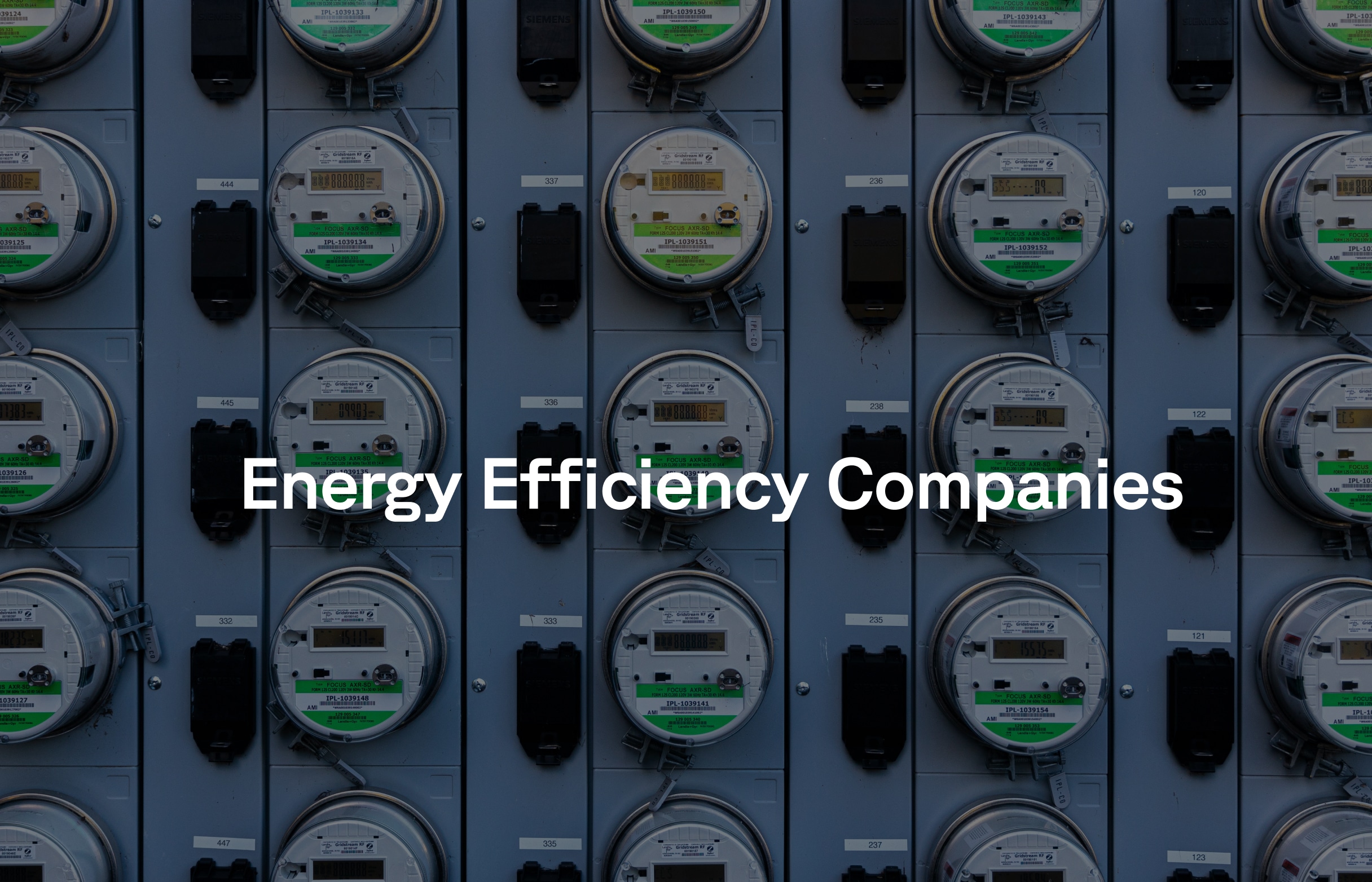
Energy Efficiency Companies: Enhancing Building Performance with IoT Connectivity