The IoT Gateway: Bridging the Gap in Smart Building Connectivity

- What is an IoT Gateway?
- The Difference Between a Router and an Intelligent Gateway
- Why Edge Computing Matters in IoT Gateway Devices
- The Challenge: Fragmented Protocols in Buildings
- Wattsense: The Plug & Play IoT Gateway Solution
- Key Features of a Modern Building Gateway
- Use Cases: From Retrofitting to Smart Monitoring
- Conclusion: Future-Proofing Building Management
The modern built environment is a complex ecosystem of mechanical and electrical systems. From HVAC and lighting to elevators and energy meters, every component generates data. However, the true potential of a smart building remains untapped if these systems cannot communicate. This is where the iot gateway becomes the indispensable architect of digital infrastructure.
An IoT gateway acts as a centralised hub, facilitating the seamless exchange of information between field devices and management software. By providing the necessary interoperability, these devices allow Facility Managers to improve building performance, save time, and significantly cut operational costs. In this guide, we explore how an intelligent gateway IoT strategy transforms traditional properties into high-performing assets.
What is an IoT Gateway?
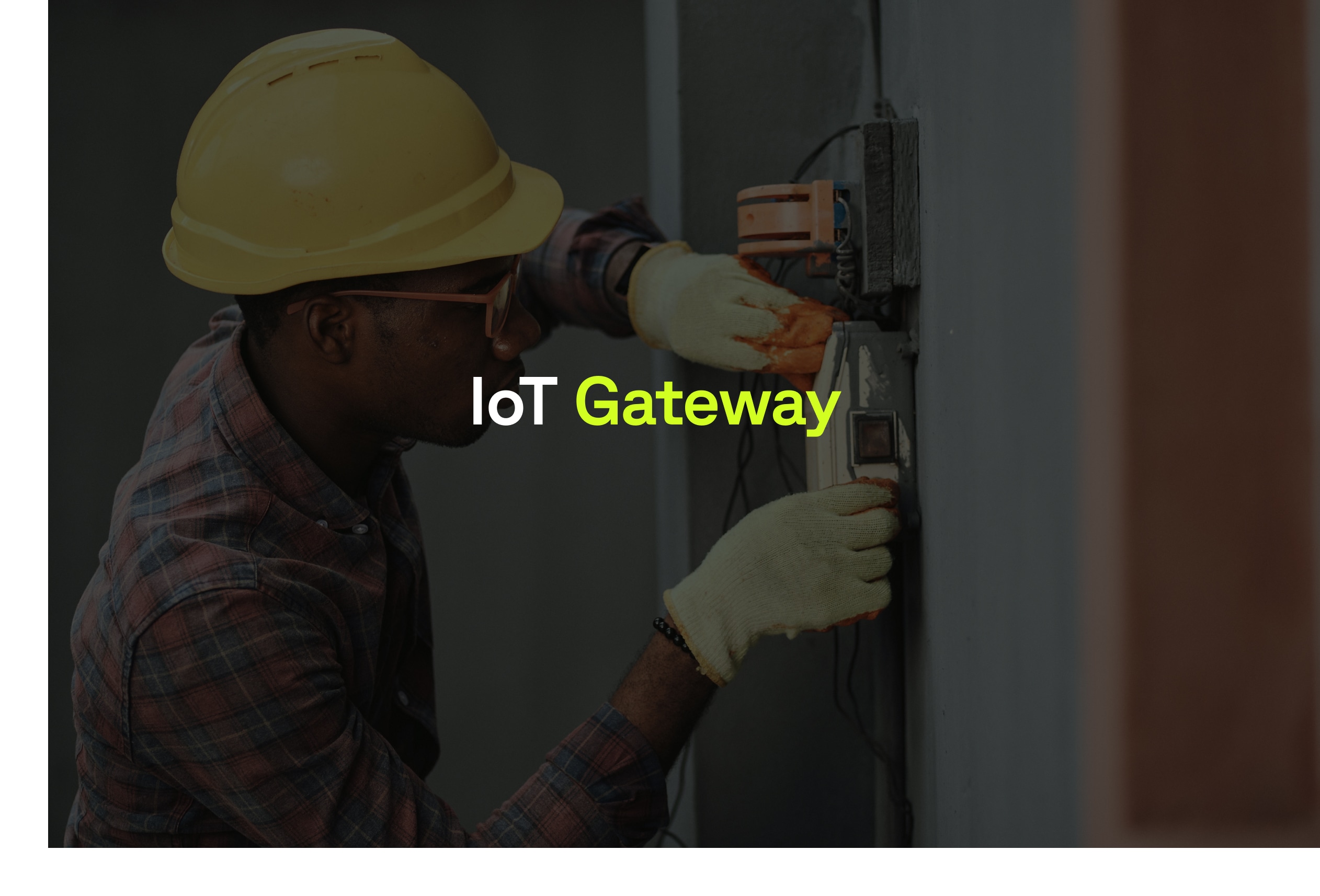
In the context of building automation, understanding what is iot gateway technology requires looking at it as a universal translator. It is a physical device or software program that serves as the connection point between controllers, sensors, and the cloud or a local supervisor.
Without iot gateway devices, the data generated by a boiler or a CO2 sensor would remain "trapped" in its local environment. The gateway provides the entry point for this data to move into higher-level systems, such as a BMS (Building Management System) or a PropTech analytics dashboard.
Definition and Core Function: Translating Protocols
The primary function of an iot gateway is protocol translation. Buildings are filled with equipment from various manufacturers, most of which speak different technical languages. A chiller might use BACnet, while the electrical meters use Modbus, and new wireless air quality sensors utilize LoRaWAN.
An intelligent gateway ingests these diverse signals and converts them into a standardized format. This process of normalization is what enables data collection at scale. By unifying these protocols, the gateway ensures that the management software receives a clean, consistent stream of information regardless of the hardware source.
The Difference Between a Router and an Intelligent Gateway
While a standard network router simply moves packets of data from one point to another without looking at the content, iot gateway devices are much more sophisticated. A router works at the network layer, whereas a gateway operates at the application layer.
An industrial iot gateway understands the data it is processing. It can filter information, prioritize critical alerts, and even translate a serial signal from an RS485 wire into an MQTT message for the cloud. While a router provides the path, the gateway provides the comprehension and translation necessary for building systems to work together.
Why Edge Computing Matters in IoT Gateway Devices
Modern smart building architectures rely heavily on edge computing. This refers to the gateway's ability to process data locally, "at the edge" of the network, rather than sending every single raw data point to the cloud for analysis.
Edge computing provides three major advantages:
- Latency Reduction: Decisions (like shutting off a valve during a leak) can happen in milliseconds without waiting for a cloud response.
- Bandwidth Efficiency: The gateway only sends relevant summaries or critical alerts to the cloud, saving on data costs.
- Reliability: Even if the internet connection drops, the gateway can continue to manage local automation and store data for later synchronization.
The Challenge: Fragmented Protocols in Buildings
The greatest hurdle to achieving a high-performing smart building is technical fragmentation. Historically, the building industry has been dominated by proprietary systems that were never designed to be open or interoperable. This has created a "Tower of Babel" in the plant room.
The "Language Barrier" of Legacy Equipment (Modbus, M-Bus)
Most existing building stock relies on legacy equipment. Boilers, pumps, and older meters often utilize serial communication standards like Modbus RTU or M-Bus. These protocols are robust but lack the native internet connectivity required for modern remote monitoring.
An iot gateway must bridge this gap. By physically connecting to these legacy ports, the gateway "digitalizes" the equipment. This allows an old boiler room to become as visible and manageable as a brand-new installation, which is a core requirement for any retrofitting project.
Integrating Wireless Sensors (LoRaWAN) with Wired Systems
The rise of LoRaWAN has revolutionized data collection by allowing the installation of wireless, battery-powered sensors that can penetrate thick concrete walls and reach across entire campuses. However, most traditional BMS platforms do not natively support wireless IoT protocols.
A modern gateway iot solution solves this by acting as a bridge between the wireless and wired worlds. It can collect data from wireless sensors and "inject" it into a wired BACnet or Modbus network. This allows Integrators to add granular monitoring (like desk occupancy or leak detection) to an existing system without invasive and expensive cabling.
Security Risks in Standard Industrial IoT Gateways
Security is a primary concern when connecting building infrastructure to the internet. Many generic industrial iot gateway devices on the market offer limited security, leaving buildings vulnerable to cyber-attacks. If a gateway is compromised, an attacker could potentially gain control over critical systems like heating or access control.
To mitigate these risks, professional building gateways must incorporate:
- Encrypted Communication: Using TLS/SSL for all data sent to the cloud.
- VPN Tunnels: Secure remote access that doesn't require opening dangerous ports in the building's firewall.
- Certificate-Based Authentication: Ensuring only authorized devices can join the network.
Wattsense: The Plug & Play IoT Gateway Solution
Wattsense provides a revolutionary technology designed to simplify building management. We remove the technical barriers to connectivity, allowing you to collect and centralise data from any asset, regardless of its age or protocol. Our mission is to help you improve building performance and cut operational costs through a streamlined, Plug & Play approach.
Our solution is composed of an interoperable iot gateway and a powerful cloud console. Whether you are an integrator looking for local control or a PropTech company needing cloud data, Wattsense offers three tailored solutions to solve your building connectivity issues.
The Bridge: Your Gateway for Local BMS Integration
The Wattsense Bridge is our foundational solution for local data acquisition and on-site supervision. It is the most innovative open, interoperable iot gateway for connecting your building equipment to an existing BMS or other supervision tools.
Key features of the Wattsense Bridge include:
- Remote Configuration: Manage your gateway settings and mapping from anywhere via the cloud console.
- Real-Time Data: Access immediate insights from your connected devices for local automation.
- Local Redirection: Easily integrate and convert data between BACnet, Modbus, or MQTT for on-site control.
- Ideal Use: Perfect for projects where you need a reliable local bridge for wireless sensor data (e.g., LoRaWAN) to be integrated into an existing wired system.
Tower Lift: A Cloud Gateway for PropTech Data Acquisition
For those who want to leverage building data without needing direct automation from the gateway, Tower Lift is the ultimate IoT solution. It focuses purely on efficient and secure data retrieval, providing powerful cloud connectivity.
Tower Lift is designed for PropTechs and large-scale asset managers:
- Data Historisation: Store and access historical data for in-depth analysis and ESG reporting.
- API & Webhook Integration: Seamlessly push data to your preferred cloud platforms and custom applications.
- Residential Portfolios: Ideal for collecting vast amounts of data (meters, environmental sensors) across thousands of sites via a single API for billing and maintenance.
Tower Control: Adding Intelligence and Automation at the Edge
Tower Control is our flagship offering, providing a full suite of tools for monitoring, controlling, and optimizing building performance. It acts as a "Light BMS," putting you in command of your infrastructure without the cost or complexity of a traditional system.
Main features of Tower Control:
- Automation Scenarios: Create custom rules at the edge to optimize energy consumption and comfort.
- Scheduling: Implement time-based controls for HVAC and lighting.
- Remote Alarms: Receive instant notifications for critical maintenance events.
- Dashboards: Visualize building performance with customizable insights and intuitive graphs.
- Use Case: Small to medium-sized commercial buildings where you need to implement intelligent automation to react to conditions and reduce costs.
Key Features of a Modern Building Gateway
To be truly effective in a smart building environment, an iot gateway must be more than just a piece of hardware. It must be an adaptable platform that evolves with the building's needs. The following features are essential for any professional-grade building gateway.
Universal Interoperability (BACnet, Modbus, MQTT, LoRaWAN)
True interoperability means that the gateway should not lock you into a single vendor's ecosystem. A modern gateway must support the primary languages of the industry natively:
- BACnet (IP & MS/TP): The standard for HVAC and building automation.
- Modbus (TCP & RTU): For heavy machinery and power meters.
- M-Bus: For utility metering (water, gas, heat).
- LoRaWAN: For long-range wireless sensing.
- MQTT: For cloud communication.
By supporting these protocols simultaneously, the gateway acts as the "unified field" that brings all building data together into a single, actionable stream.
Remote Configuration and Updates (No More Site Visits)
One of the greatest hidden costs in building management is the "truck roll"—sending a technician to a site to change a configuration or update software. A modern iot gateway must be manageable remotely.
The Wattsense console allows Integrators to discover devices, map data points, and configure automation logic from their office. Firmwares and security patches are pushed over-the-air (OTA), ensuring that the iot gateway devices are always up-to-date and secure without the need for manual on-site intervention. This "Quick to Install" and "Easy to Manage" philosophy saves thousands in labor costs over the building's lifecycle.
Gateway IoT Security: Secure Connectors and VPNs
Security must be built-in, not bolted on. A professional gateway iot should provide a secure environment for data transmission without requiring the user to be a cybersecurity expert.
Modern gateways utilize "Secure Connectors" and outgoing VPN tunnels. This means the gateway initiates the connection to the secure cloud, which eliminates the need for inbound firewall rules that could be exploited by hackers. With Wattsense, your building data is protected by industry-standard encryption, ensuring that building performance data remains confidential and critical controls remain secure.
Use Cases: From Retrofitting to Smart Monitoring
For Integrators: Unifying Multi-Protocol Sites
Integrators are often tasked with making disparate systems work together. In a typical retrofitting project, they might encounter a site with an old Trend BMS, new Schneider meters, and a requirement to add wireless CO2 sensors.
Using the Wattsense Bridge, the integrator can unify these systems in hours rather than weeks. The gateway collects the Modbus meter data and the LoRaWAN sensor data and converts them into BACnet IP objects that the existing BMS can "see." This enables local automation based on real-time conditions without a total system replacement.
For Facility Managers: Real-Time Alerts and Energy Data
Facility Managers are under increasing pressure to reduce operational costs and meet sustainability targets. Without granular data, they are essentially "flying blind."
By deploying Tower Control, a facility manager can:
- Centralise Data: See all meter and HVAC data in one dashboard.
- Monitor Performance: Spot "energy leaks" where systems are running in empty rooms.
- Automate Response: Set schedules that ensure equipment only runs when needed.
- Preventive Maintenance: Receive an alarm when a boiler pressure drops or a pump fails, allowing for a fix before a tenant even notices a problem.
The result is a building that is more efficient, cheaper to run, and better for the environment.
Conclusion: Future-Proofing Building Management
The era of siloed, "dumb" buildings is ending. As regulations around energy efficiency tighten and tenant expectations rise, the ability to collect, interpret, and act on building data is no longer optional. The iot gateway is the tool that makes this possible.
By choosing an open, interoperable solution like Wattsense, you are future-proofing your real estate assets. Our technology turns traditional buildings into smart buildings quickly and cost-effectively. Whether you need local integration with the Wattsense Bridge or cloud-scale data with Tower Lift, we provide the connectivity backbone for the next generation of building management.
Ready to transform your building? Discover how Wattsense can simplify your connectivity and help you take command of your data. Reach out to our team today to find the perfect iot gateway solution for your portfolio.
Want to learn more about the Wattsense connectivity solution?
Discover our solutionContinue reading